

 By
·
2 minute read
By
·
2 minute read
Session Speaker: Rich Marsh, Sales Strategist and Virtual Sales Director
Theme: Sales, Marketing & Technology
Date: Summer Trimester - May 2025
Rich Marsh opened his Summer Residential session with a blunt truth: people still don’t trust salespeople.Not because they’re bad people, but because too often the conversation is rushed, misaligned, or self-serving.
That’s not a problem with product or pitch. It’s a problem with trust, and trust, as Rich showed us, is built gradually and deliberately.
Sales is a trust journey - not a transaction
Too many businesses try to accelerate trust like a sales funnel. But Rich reminded us that genuine relationships move at a human pace, and often, they move backwards as well as forwards.
He mapped out five stages of trust in a sales relationship: - Awareness - Communication - Direction - Consultation - Vulnerability
Each stage requires something different from you as the seller and from your wider business. Miss a stage, or rush it, and the trust breaks. Instead of adapting to where the client is, we often default to telling, overexplaining or pushing toward a solution too quickly.
One sharp takeaway:
- If a sale falls through, it’s not because the client didn’t get it.
- It’s because we didn’t help them understand it properly.
The trust formula - and what undermines it
Rich broke trust into six foundations: Credibility, Reliability, Intimacy, Likeability, Value, all of which can be undermined by Self-Orientation.
Self-orientation is when we talk too much, say more than the client needs, or steer conversations toward what we want to say. Salespeople don’t lose trust because they lack charisma, they lose it because they centre themselves.
He encouraged us to reflect on our own habits. Are we really listening, or just waiting to speak? Are we adapting to different roles and needs in the buying group, or treating everyone the same?
Trust isn’t just a sales issue
Rich challenged the room to consider who in the organisation owns trust. Is it the sales team? Marketing? Leadership?
The reality is, trust is built across every touchpoint. From delivery teams honouring commitments, to marketers making realistic claims, to follow-up that feels consistent and considered. Sales doesn’t work in isolation and neither does trust.
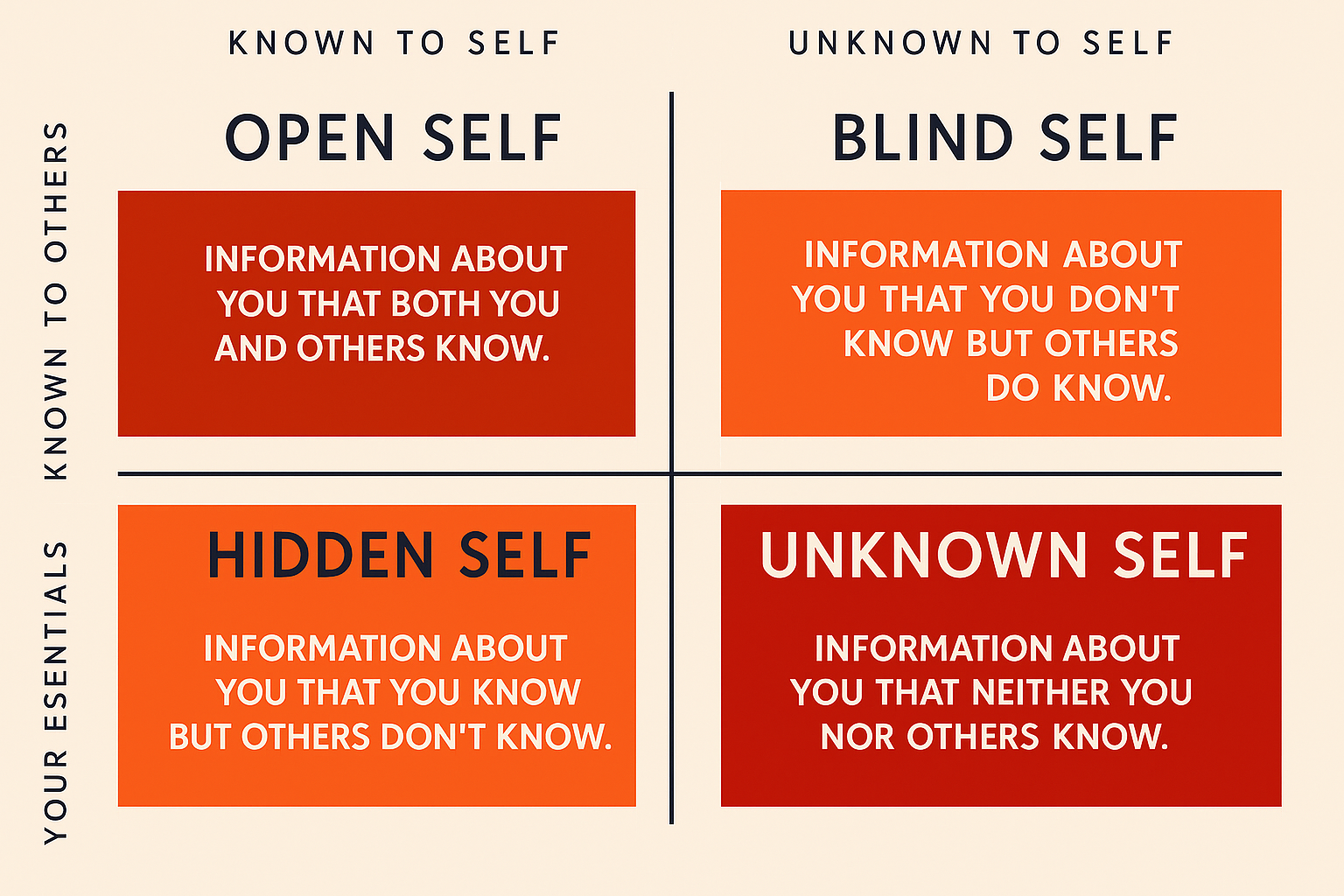
The Johari Window model offered a useful metaphor: how much of what we know about ourselves (or the client) is hidden, public, blind, or unknown? Good sales conversations move things into the open - but only when trust allows for honesty.
So if you want better sales outcomes, start with a better sales question: how do we earn trust across the whole relationship, not just at the close?
- Where might self-orientation be showing up in your business conversations?
- How do your processes support - or erode - reliability and follow-through?
- Who else in your team contributes to building (or breaking) customer trust?